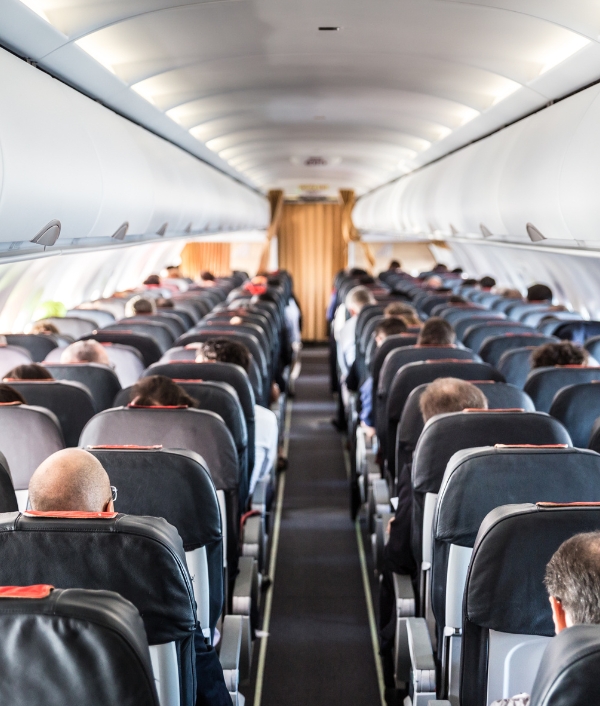
Understanding jet lag and getting back into your rhythm faster
When the internal clock goes out of sync
Jet lag is not an illness, but the consequence of a disrupted internal clock. Our body possesses a biological 24-hour rhythm, the so-called circadian rhythm. This controls, among other things, sleep, wakefulness, body temperature, hormone release, and even digestion and metabolism. After a long-haul flight, the clock at the destination adjusts immediately – but the internal clock does not. The body initially continues to live according to the time of its home country. The more time zones that are flown over, the greater this discrepancy is, and the more pronounced the symptoms can be. Flights over more than three time zones, in particular, frequently lead to jet lag. Travel to the east (e.g. Europe → Asia) is usually perceived as more burdensome than travel to the west (Europe → America), as the body adapts more easily to a longer than to a shortened day.


Typical symptoms of jet lag
Jet lag affects far more than just sleep. The following are commonly experienced:
- Sleep onset or sleep maintenance disorders
- pronounced daytime sleepiness
- Concentration problems
- Reduced performance
- Irritability
- Headache
- Loss of appetite or hunger at unusual times
- Digestive complaints such as constipation or diarrhoea
Most complaints improve on their own within a few days. As a general rule, the body needs about one day per time zone crossed to fully adjust.
This is how jet lag can be effectively relieved
The most important “therapy” is to adjust the internal clock to local time as quickly as possible. This includes:
- After arriving, eat and sleep as soon as possible according to local time.
- Make the most of natural daylight during the day
- Maintain regular meals
- Drink enough
- Avoid alcohol as much as possible
- Use caffeine strategically (not shortly before intended bedtime)
- Avoid long daytime naps or limit them to a maximum of 20–30 minutes.
Even a few days before travelling, it can be helpful to gradually adjust your sleeping and waking times to your destination time.


Daylight as a natural helper
The strongest regulator of our internal clock is daylight. Bright light signals the brain to wake up and shifts the sleep-wake cycle. Depending on the direction of travel, light can be used strategically:
- Travelling east: Morning daylight aids earlier adjustment.
- Journey West: Evening daylight helps to stay awake longer.
That's precisely why it's worth spending as much time outdoors as possible after arriving.
Using melatonin effectively for jet lag
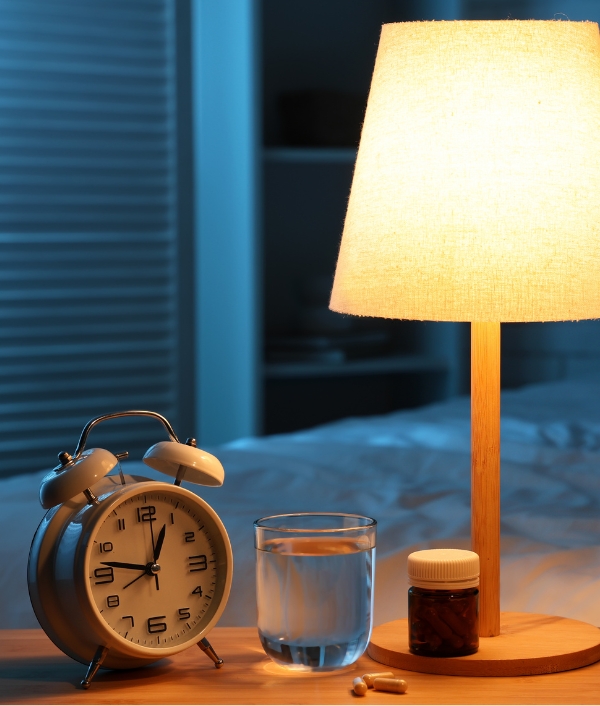
Melatonin is the body's own “sleep hormone” and plays a central role in regulating the sleep-wake cycle. Studies show that melatonin can reduce jet lag symptoms, particularly when travelling across five or more time zones. However, the correct timing of intake is crucial: it should be taken as close as possible to the desired bedtime at the travel destination. In Austria, melatonin is a prescription-only medicine, and low-dose dietary supplements are also available. Since melatonin can interact with various medications – such as warfarin, fluvoxamine, or certain sedatives – individual consultation at a pharmacy is recommended before taking it.
Common myths about jet lag
“A glass of wine helps with falling asleep.”
While alcohol often makes one tired, it degrades sleep quality and can even worsen jet lag.
“I should sleep for as long as possible to sleep off the jet lag.”
Sleeping for too long or taking long naps often delays the adjustment of the internal clock.
“Sleeping pills are the solution.”
While they can make falling asleep easier, they do not reset your internal clock and are usually not the first choice for self-medication.
“Everyone gets equally strong jet lag.”
No. Age, chronotype (“early bird” or “night owl”), flight direction, and individual sleep habits significantly influence the complaints.
Support from the Johann Strauss Pharmacy Vienna
In addition to individual consultation, different measures may be advisable depending on the travel destination and pre-existing conditions:
- Melatonin (taking into account the legal situation and possible interactions)
- Earplugs and sleep masks for better sleeping conditions
- Nasal sprays for dry cabin air
- sufficient electrolytes on long journeys and in high temperatures
- Sun protection for the first few days at your holiday destination (indirectly relevant, as sunlight supports the adjustment of the internal clock, while sunburn means additional stress for the body)
For individuals taking regular medication, it can also be checked whether the timings of their doses should be adjusted after a time zone change – for example, with insulin, certain antidiabetic drugs, or medications that must be taken at fixed times.


When medical advice is advisable
Jet lag usually improves on its own within a few days. Medical advice is advisable if:
- Sleep disturbances lasting longer than two weeks,
- even minor time differences can lead to severe discomfort,
- significant daytime sleepiness or concentration problems persist,
- a well-known sleep disorder is present,
- chronic conditions or complex medication regimens require special adaptations.
Pharmacy tips
Taking medication when changing time zones
Caution with medications with fixed times:
For medications such as insulin, certain antidiabetic drugs, antiepileptics, or immunosuppressants, a change in time zones may necessitate adjustments to the timing of when you take them. Seek personalised advice from your pharmacy or doctor's practice before travelling abroad.
Cabin air and dehydration
Not everything is jet lag:
Fatigue, headaches, or dry mucous membranes can also be caused by the low humidity in an aircraft and insufficient fluid intake. Drinking enough and, if necessary, using moisturising nasal or eye drops can be helpful here.